There is a particular moment when a small living room stops feeling considered and starts feeling crowded: one extra side table, an oversized sofa, a path that now requires a sideways shuffle. Creating breathing room rarely requires buying more. Start with the movement through the space, then let furniture follow.
Begin with the path through the room
Stand in the doorway and notice how people travel to the sofa, balcony, kitchen or adjoining room. That invisible line is the most valuable piece of the floor plan. Keep it reasonably clear rather than forcing people to walk around a coffee table or squeeze between an armchair and a wall. If the room has several doors, sketch their swing before deciding where larger pieces will sit. A layout that works on paper must still work when those doors are open.
Let the sofa establish the scale
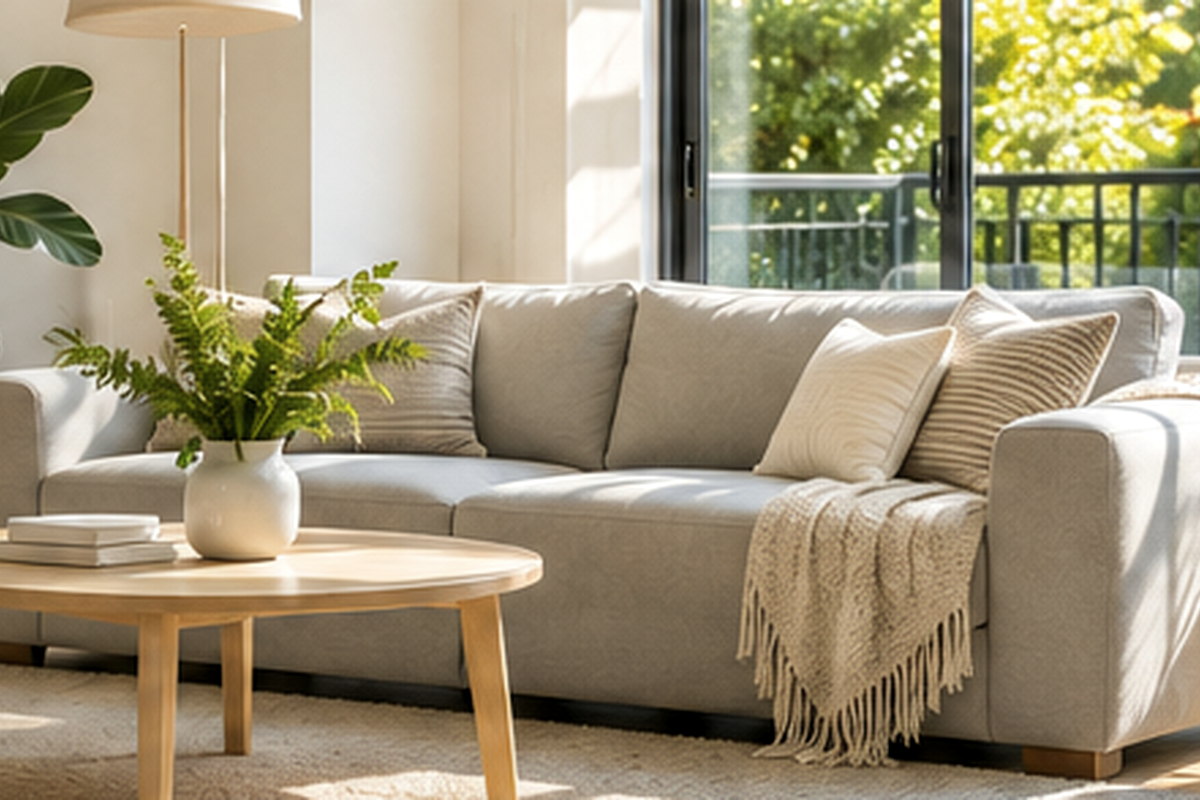
The sofa is usually the room's largest visual object, so place it before the small accessories. A slim two-seater may leave more usable floor than a deep sectional, but the right choice depends on how many people regularly sit there. Mark the proposed size on the floor with masking tape, including any recliner movement. Sit in the position where the sofa would go and check your view of the window, television and other seating. If the arrangement feels forced, change the furniture size rather than buying a smaller tray.
Choose tables for real routines
Ask what a table needs to hold: two mugs, a laptop, a board game or the occasional meal. A modest oval table can be easier to move around than one with sharp corners. Some rooms work better with a pair of side tables instead of a central coffee table; others benefit from a nesting design. Avoid assuming every room must contain the usual catalogue trio of sofa, coffee table and television console. A clear patch of floor can be the most useful feature.
Create depth with a few quiet surfaces
Repeated materials and a limited range of tones often help a compact room feel composed. A rug can visually connect the seating rather than isolate pieces on small islands. Wall lights or one well-placed floor lamp can replace several objects on tables. Try keeping one or two surfaces mostly clear rather than distributing ornaments everywhere. This is less about minimalism as an identity and more about having somewhere to put the book you are actually reading.
Live with the arrangement before shopping
Move the furniture you already own and try the new arrangement for a weekend. Notice where people leave shoes, phones and cups, and which paths still feel awkward. Only then decide whether a narrow shelf, storage ottoman or different lamp would solve something concrete. Furniture feels expensive when it is solving an imagined problem; it feels useful when it supports a routine you have already observed.