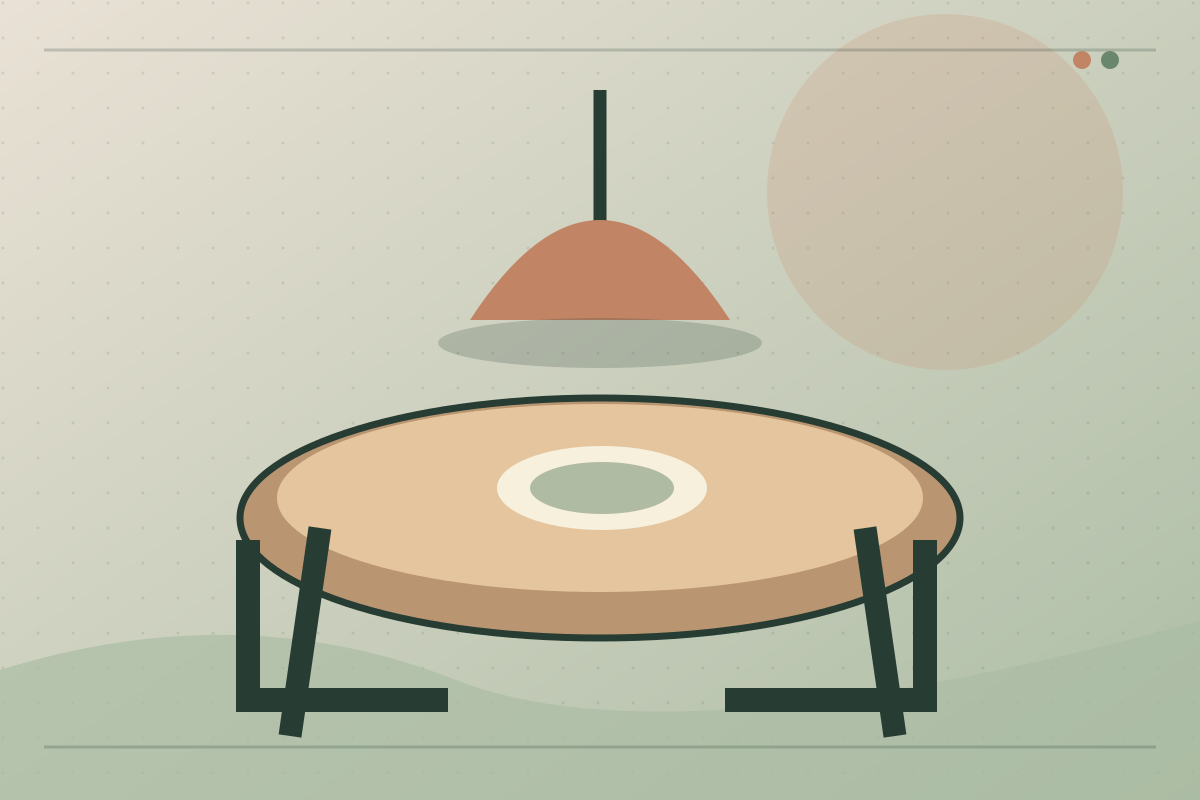
A dining area can be as simple as a table against a wall and two good chairs. What matters is whether people can sit down, move comfortably and use the surface without turning every meal into a furniture shuffle. For small homes, the best arrangement usually begins with the actual number of everyday diners.
Count the regular seats first
If two people usually eat together, buy for two rather than building the entire room around hypothetical dinner parties. A drop-leaf or extendable table may offer flexibility, but check its dimensions both closed and open. Extra chairs can sometimes live elsewhere if they are easy to retrieve and stable in use. Think about real weekly meals before imagining a perfectly styled holiday lunch.
Test chair movement
A table fits in a tight corner more easily than a person sitting at it. Allow enough room to pull out chairs and move past seated people. Check nearby cabinets, doors and walkways. Use masking tape and a dining chair from elsewhere in the home to experience the intended footprint. Avoid narrow passageways that become blocked every time someone sits down.
Use a bench only when it helps
A bench can tuck neatly under a table and create a compact look. But it may be less comfortable for longer meals, and moving in or out can be awkward for some people. Choose furniture based on the diners' needs rather than the image. If you do use a bench, make sure it is stable and does not interfere with the table or wall.
Consider wipeability and light
Dining surfaces see hot dishes, spills, craft projects and the occasional laptop. Select a durable finish compatible with the way you use it and protect it according to the maker's directions. A small pendant or wall light can help define the eating area, but electrical work must be carried out by qualified professionals. An existing portable lamp may be a simpler starting point.
Let it do more than look lovely
Keep placemats, napkins and the items used at the table close enough to reach. Leave room for a glass of water and a serving dish. If the table doubles as a desk, create a quick way to clear work materials. A dining nook succeeds when it remains pleasant during an ordinary weekday meal, not merely when everything is pushed into place for a photograph.