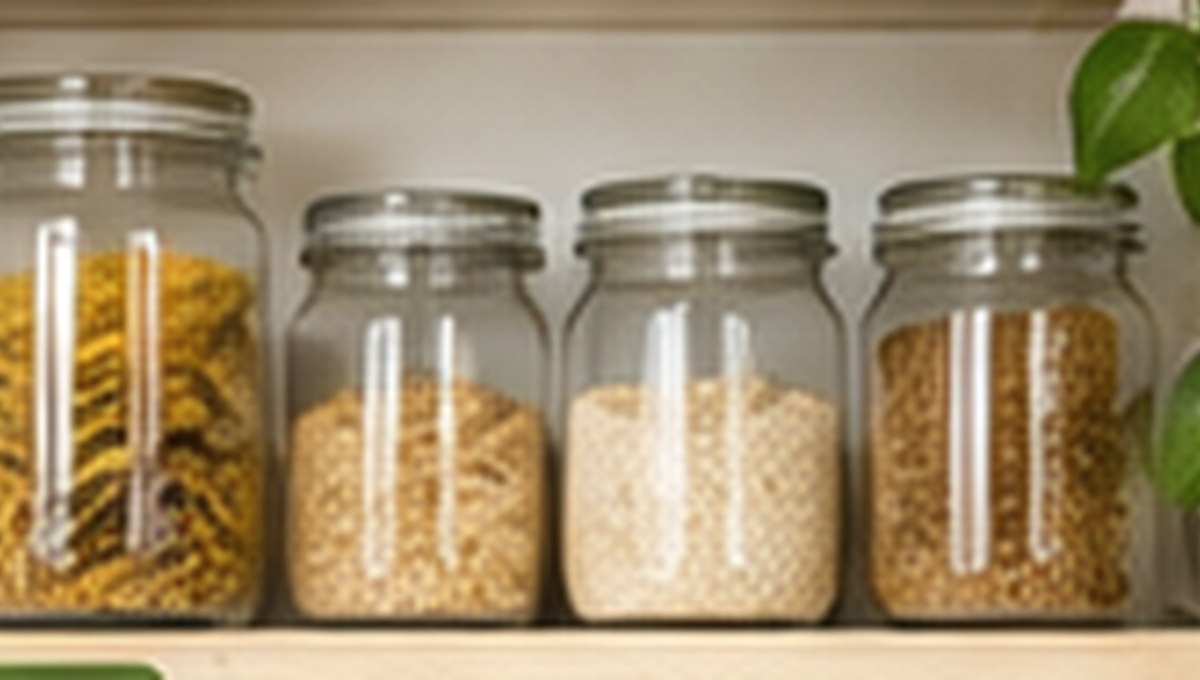
A beautiful row of matching jars can make a pantry look finished. It does not automatically make dinner easier. The most useful pantry is arranged around the things you buy, the shelves you can reach and the meals you cook on ordinary weeknights.
Do a quick inventory before buying containers
Take items off one shelf at a time and group them by use: breakfast, baking, everyday cooking, snacks and back-up supplies. Check the dates and packaging condition. Avoid replacing every original package with a jar just for visual uniformity; many packages carry cooking instructions, use-by information and allergen details worth keeping. If you decant, label the container with the contents and relevant dates.
Put the usual ingredients where hands can reach
The ingredients used several times a week deserve the most accessible spots. Keep heavy items at safer lower heights, and avoid balancing jars on narrow shelves. A frequently used bottle of oil beside a regular cooking area may be more convenient than one tucked into a distant cupboard, provided heat and storage directions are considered. Organise by frequency rather than by photographic symmetry.
Choose containers for an actual problem
A sealed container may be useful where pests or moisture are an issue, but a full pantry of new containers is expensive and may waste space. Measure shelf depth and height before shopping. Clear, stackable containers are not inherently better if they obscure labels or make it hard to reach things at the back. Start with two or three items and see whether the change genuinely helps.
Make older stock visible
Put older unopened items where you will see them first, without using food beyond safe date guidance. Keep a small 'use soon' area for items approaching their best quality. This helps you plan meals around ingredients already on hand, rather than buying a second packet of the same thing because the first disappeared behind a basket.
Test the system on a busy night
After a week, notice what still ends up in the wrong place. If tea bags repeatedly appear beside the kettle rather than in the breakfast box, move the tea. A pantry that works naturally needs fewer labels and less instruction. The outcome should be less time searching, less unnecessary buying and a kitchen that is easier to maintain.